Prologue. Twelve inches
There is a distance we grant to very few.
Twelve inches, perhaps less. The distance of a mother bending over a cradle. Of two lovers on one pillow. Of someone keeping watch over the sick, listening to them breathe.
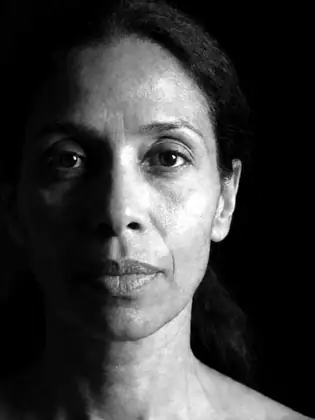
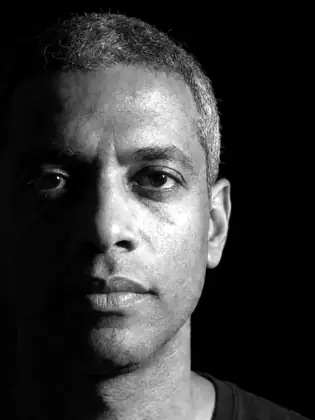
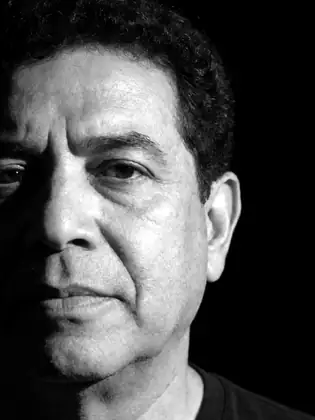
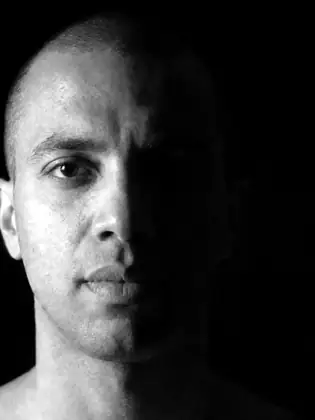
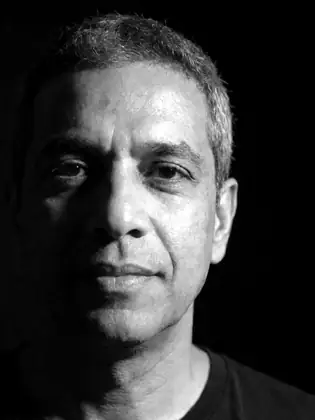
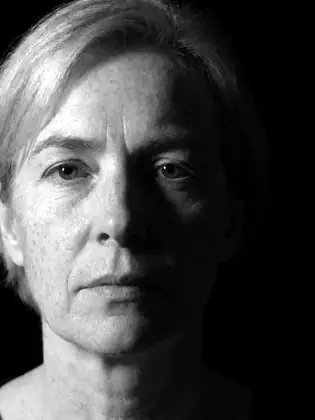
At that distance a face stops being a portrait and becomes a landscape. You see the pores, the down above the lip, the small vein beating at the temple. You see time passing over the skin.
For thousands of years, no one looked at a stranger from so close. Then, one evening, in a darkened room, cinema arrived. And it set before us, ten feet tall, the faces of people we would never meet.
No one had asked our permission. No one had asked theirs.
Paris, 1927
In a studio on the edge of the city, a barber is cutting a woman's hair. It is not pretence. The locks really fall to the floor, one after another, and it is said that someone at the back of the set is weeping.
The woman's name is Renée Falconetti. She is thirty-five. She is playing Joan of Arc, and no one on the set is wearing make-up.
Carl Theodor Dreyer shoots almost the entire film in close-up. He takes away the space, takes away the horizon, takes away almost the world. What remains are heads. Heads of judges, of monks, of soldiers, and among them one shaven head, looking up.
André Bazin would later write that this is not a film of actors. It is a documentary of faces. The pockmarks on a bishop's cheek are as much a part of the action as the words of the trial. The movement of a wrinkle, the fold of a lip, are seismic shocks. Tides. The ebb and flow of human skin.
Think about it. A wrinkle shifts by a millimetre, and in that millimetre there is a tide.
This is what the close-up is: a lens laid upon the soul, which can see only the skin. And which makes us believe that the two are one and the same.
Moscow, around 1920
A young director, Lev Kuleshov, takes a shot of the actor Ivan Mozzhukhin. A still face, almost blank. He cuts it in three times. First beside a bowl of soup. Then beside a little girl in a coffin. Then beside a woman lying on a sofa.
The audience, so the story goes, praises the actor. Such hunger in his eyes. Such grief. Such desire.
The face was always the same.
From this, cinema learns a law: the meaning of a face does not live in the face, but beside it. In the shot before, in the shot after. The cut decides what a man feels.
But Bazin looks at the point everyone else had taken for granted. If that face could mean three different things, he writes, it is only because of its ambiguity. It is the ambiguity that makes all three expressions possible.
So the question changes. Not: what does a face express? But: how much can it hold?
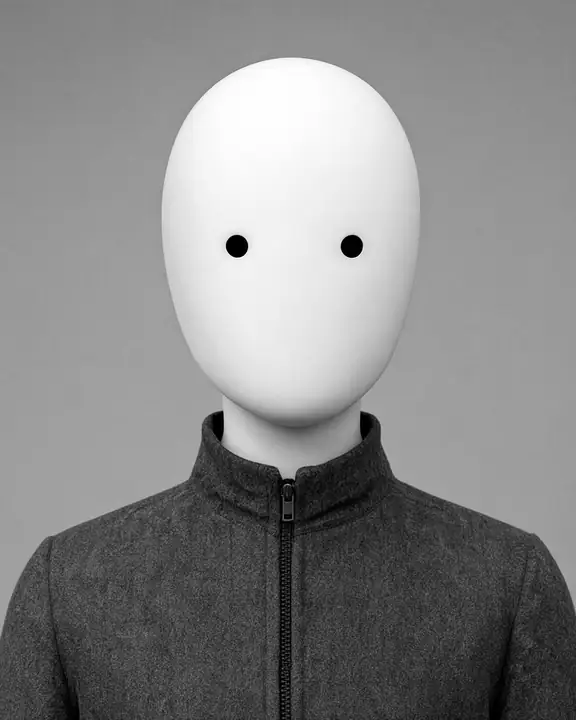
A face in close-up is a well. We lean over the edge, and at the bottom we see our own reflection. The hunger was ours. The grief was ours. The desire, too.
Rome, 1948
A city getting back on its feet. Bicycles, posters to paste up, queues outside offices. Through all of it walks a boy of eight. His name is Bruno. Beside him, his father has just lost the one thing that gave him work.
Vittorio De Sica does not ask Bruno to act. He finds him in the street, puts him in a jacket too big for him, and films him while he looks. He does not tell us what the boy understands. In the end the father steals too, is caught, is shamed in front of everyone. And we never see the son's judgement. We see his face, watching.
Bazin loved this film so much that he said there were no more actors in it, no more story, no more staging. Only reality, left to speak. It is the opposite of Kuleshov. Kuleshov wanted to fix the meaning of a face. De Sica wants to leave it open.
It is a moral choice before it is an aesthetic one. To come close to someone without claiming to understand them. To stand twelve inches from a sorrow and not name it.
Perhaps the truest close-up is the one that gives up explaining. That leaves us there, beside a boy taking his father's hand, without knowing what he thinks.
At the edges of the frame
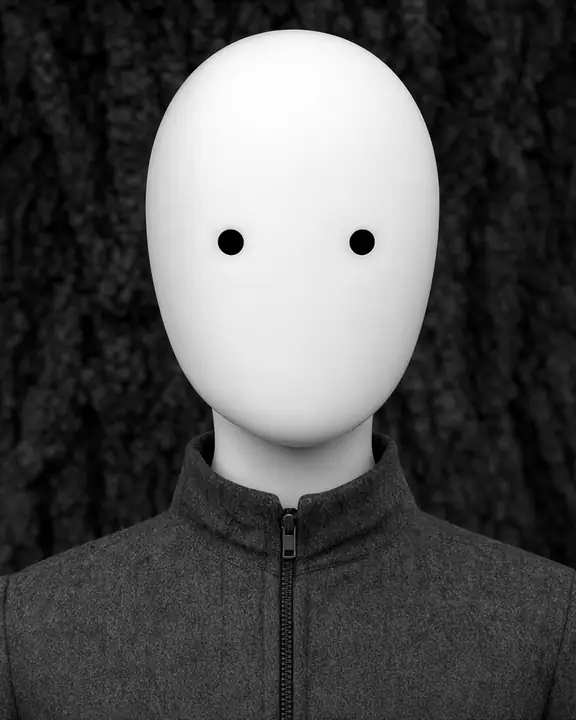
A frame encloses a painting and sets it apart from the wall. The screen, Bazin says, is not a frame. It is a mask: it lets us see only part of what is happening. When a character walks out of shot, we know they go on existing somewhere else, in a space hidden from us. The screen has no wings.
And that is exactly why it can make a face the centre of the universe.
Think of enlargement as a force. The face fills the frame and pushes the world to the margins, out of shot. But the world does not disappear. It presses in from the edges. We feel it in a gaze that slides to the left. In an eyelid that lowers at a sound we cannot hear. In the light that changes on a cheek because somewhere, a cloud has covered the sun.
The face in close-up is where the unseen enters the scene without showing itself. Everything we do not frame is reflected there. A room. A war. Another person.
Twenty-four times a second
Before cinema, before photography, before painting, there were mummies. This is where Bazin begins. The Egyptians embalmed bodies to wrest them from time. Every image one person has ever made of another carries that ancient wish within it: to save them from a second death, the death of being forgotten.
Photography does not create eternity, as art does. It embalms time. It simply rescues it from its own decay.
Cinema goes one step further. It does not preserve the instant, like an insect in amber. It preserves duration. Change itself, mummified.
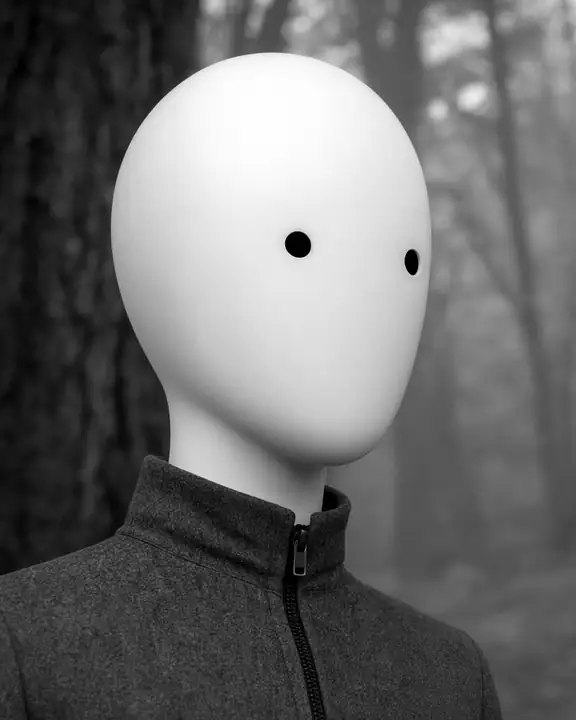
This is what a face in close-up is: change, mummified. A smile that is born, hesitates, fades. Twenty-four times a second, light touched that skin and then touched the film. What we see does not resemble that face. It is its imprint. Bazin thinks of the Shroud, of Veronica's veil pressed upon the face of human suffering.
So when we watch Falconetti weep, we are not watching a memory. We are watching one hour of one day in 1927 that is still taking place. She has been dead for eighty years. Her tear has not.
In the dark
A close-up, Bazin writes again, can drown us in a tear.
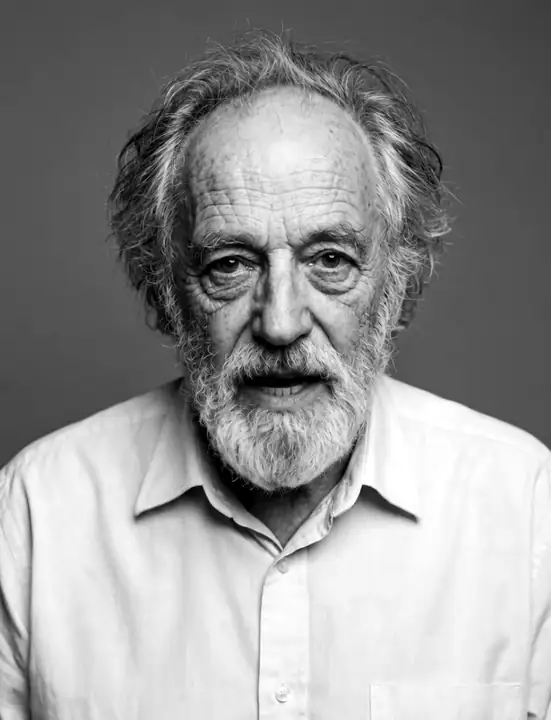
It is no exaggeration. Sitting in the dark, our bodies still and our eyes held fast, we do what we have done since the day we were born: we read faces. A newborn, a few hours into the world, already prefers a face to any other shape.
The close-up speaks to that ancient part of us. The part that does not reason, but measures. The widening of a pupil. The length of a blink. A muscle at the corner of the mouth that tightens and lets go before the rest of the face has decided what to say.
And we answer. Without knowing it, our muscles begin to mirror those on the screen. A whole room, frowning at the same instant.
This is why, in close-up, an actor must do less. Krzysztof Kieślowski knew it. In Blue, a woman has lost her husband and her daughter, and decides to feel nothing ever again. The film opens on one of her eyes, enormous. Inside the eye, very small, is the doctor speaking to her. We do not see the grief. We see the world reflected on a surface that will not let it in.
For almost the whole film, Juliette Binoche does not cry. And it is the tear held back that fills the room.
A face that does nothing. And precisely because it does nothing, it lets us see everything.
Epilogue. The face we never see
There is one face none of us has ever seen directly. Our own.
We know it reversed, in mirrors. Frozen, in photographs. We know it through other people's eyes, by the way they change when they look at us.
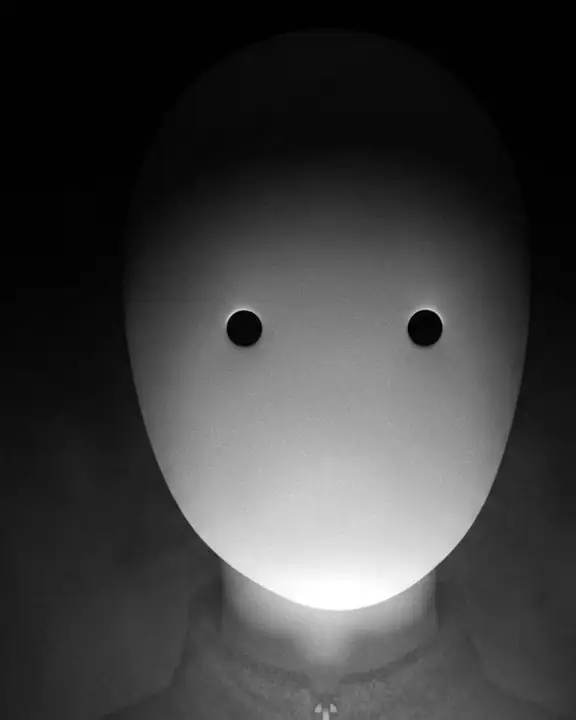
Perhaps this is why the close-up unsettles us. It shows us a face the way others see ours: up close, defenceless, thinking of something it does not say.
Imagine the lights going down a little further. On the screen, a face ten feet tall. In the seats, hundreds of small faces, lit by that one. Bathed in the same light. No camera frames them.
And yet, if we could see them, each one would be a close-up. A wrinkle shifting by a millimetre. A tide.